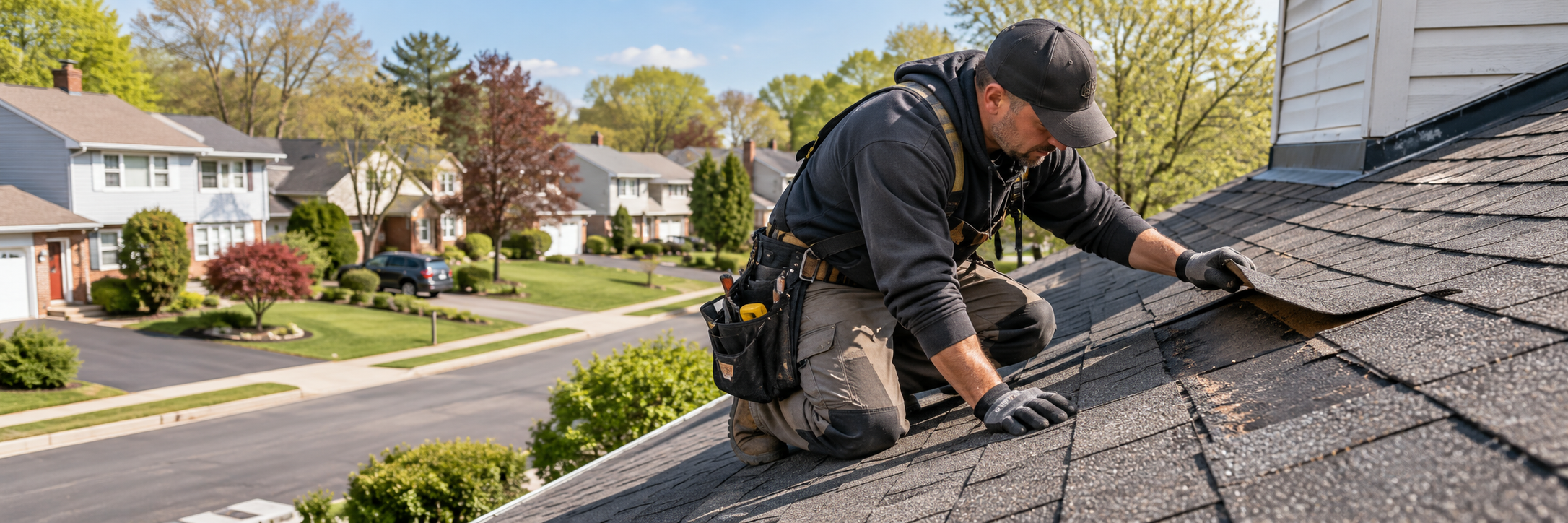
Noticing roof leaks, ceiling stains, missing shingles, or moisture after heavy rain? For Long Island homeowners, these warning signs can indicate roofing problems that may lead to larger repairs if they are ignored.
1. Look for Water Stains on Ceilings or Walls
Brown or yellow stains on ceilings and upper walls are often among the first visible signs of a roof leak.
The source of the water may not be directly above the stain because moisture can travel along roof decking, framing, or insulation before becoming visible inside the home.
If a stain grows after rainfall, feels damp, or repeatedly returns, the roof should be evaluated before the damage spreads.
2. Check for Missing, Cracked, or Damaged Shingles
Wind, storms, temperature changes, and normal aging can loosen, crack, or remove shingles.
Even a small damaged section can expose the roofing layers underneath to moisture.
From ground level, homeowners may notice shingles that appear lifted, curled, cracked, or visibly different from the surrounding roof.
3. Watch for Moisture or Mold in the Attic
A damp attic, musty odor, wet insulation, or dark staining on wood can indicate that moisture is entering through the roofing system.
Roof leaks and ventilation problems can both contribute to attic moisture.
If the problem continues, it may eventually affect insulation, drywall, ceilings, and other parts of the home.
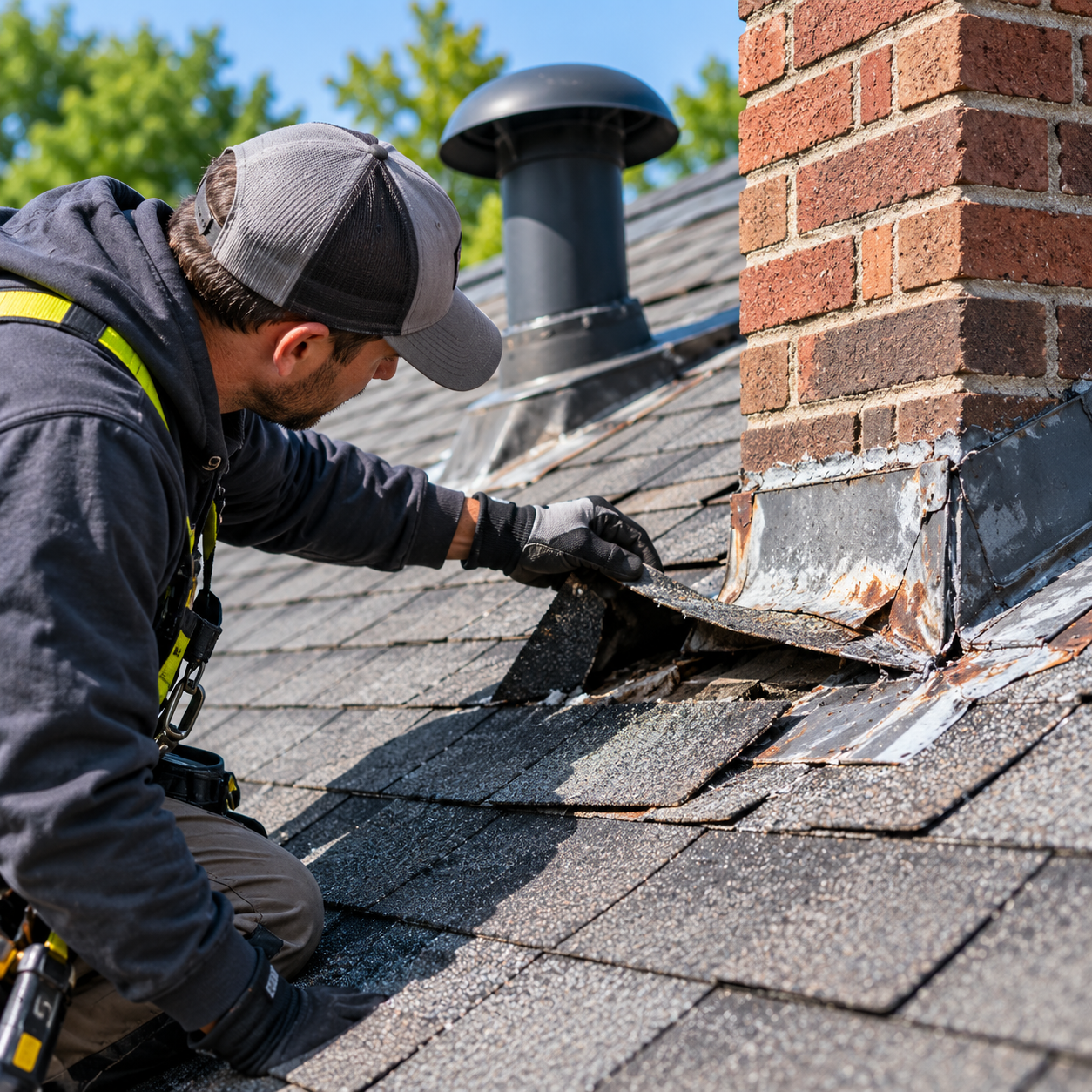 4. Inspect Areas Around Chimneys, Vents, and Skylights
Flashing helps protect some of the most vulnerable parts of a roof, including the areas around chimneys, vents, skylights, and other roof penetrations.
When flashing becomes loose, cracked, or improperly sealed, water may enter around these openings.
Leaks that appear near these areas should be inspected before assuming that the surrounding shingles are the only problem.
5. Pay Attention to Sagging or Uneven Roof Areas
A roof that appears dipped, uneven, or sagging can indicate deterioration beneath the visible roofing materials.
Possible causes may include prolonged moisture, damaged decking, or structural movement.
A sagging area does not always mean the entire roof needs replacement, but it should not be ignored.
6. Check for Shingle Granules in Gutters
Asphalt shingles naturally lose some granules over time.
However, large amounts of granules collecting in gutters or near downspouts can indicate that shingles are deteriorating.
These granules help protect roofing material from weather and ultraviolet exposure, so excessive loss may be a sign that the roof should be evaluated.
7. Take Repeated Roof Leaks After Heavy Rain Seriously
A roof leak that repeatedly returns after rain usually means the underlying problem has not been fully resolved.
Temporary patches may reduce visible water for a short period, but recurring leaks can be connected to damaged shingles, flashing, roof penetrations, or deterioration in another part of the roofing system.
For Long Island homeowners, repeated leaks are a good reason to investigate the source rather than continuing to repair only the visible interior damage.
When Can a Roof Problem Cause Interior Damage?
Roof damage does not always stay on the roof.
Once moisture enters the home, it can affect:
- Ceiling drywall
- Wall surfaces
- Insulation
- Paint and finishes
- Trim
- Flooring
- Attic framing
Finding the source of the water is usually more important than simply repainting a ceiling stain or replacing damaged drywall.
The roofing issue should be addressed first, and interior repairs can then be evaluated once the moisture source has been controlled. 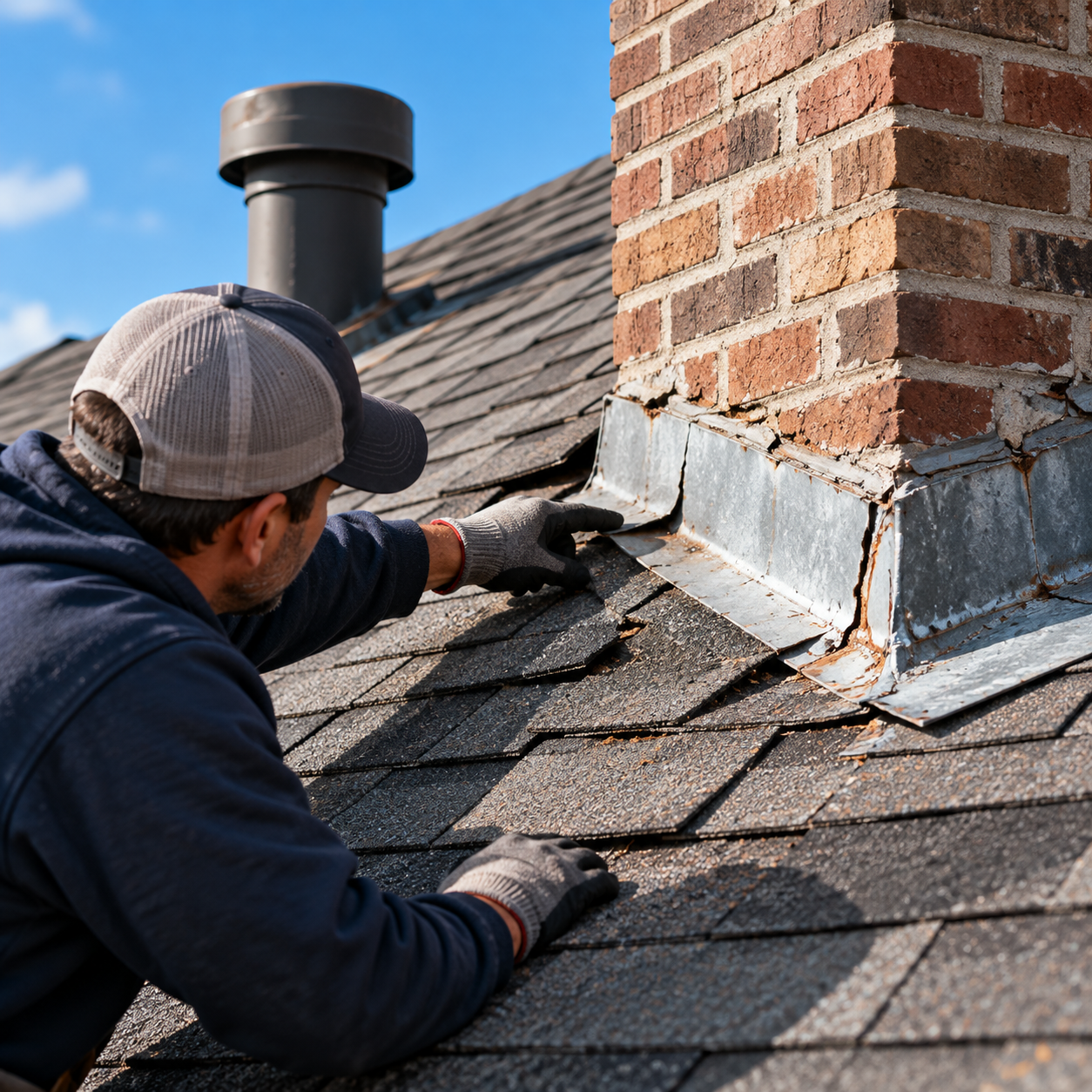
Roof Repair or Roof Replacement?
Not every roofing problem requires a complete roof replacement.
Localized damage, flashing problems, or a limited number of damaged shingles may sometimes be repaired individually.
A larger roofing solution may need to be considered when deterioration is widespread, leaks repeatedly return, structural damage is present, or the roofing system is approaching the end of its useful life.
What Should Long Island Homeowners Check After Heavy Rain?
After heavy rain, homeowners can check several areas without climbing onto the roof.
Look for:
- New ceiling or wall stains
- Damp attic insulation
- Musty odors
- Moisture near vents or chimneys
- Water near exterior walls
- Visible displaced shingles from ground level
If something inside the home changes after rainfall, that can be enough reason to investigate the roof even when the source of the leak is not immediately visible.
How Do I Find a Local Roof Repair Contractor in Nassau or Suffolk County?
Homeowners searching for roof repair near them should look beyond proximity alone.
A contractor should be able to explain what appears to be causing the problem, what areas need attention, and whether the issue can reasonably be repaired or requires a larger solution.
For projects in Nassau and Suffolk County, homeowners should also consider local experience, communication, project scope, and whether the contractor handles related exterior or interior repairs when necessary.
Roof Repair and Residential Repairs in Nassau & Suffolk County
MERGE Construction Corp. helps homeowners across Nassau and Suffolk County, Long Island, with roofing, exterior improvements, and residential repair projects.
If your home has a roof leak, damaged shingles, moisture, ceiling stains, or another warning sign, the first step is understanding where the problem is coming from and how far the damage extends.
Frequently Asked Questions
How do I know if my roof needs repair?
Common warning signs include roof leaks, missing or damaged shingles, ceiling stains, damaged flashing, attic moisture, and recurring problems after rain.
Can a small roof leak cause serious home damage?
Yes. A small roof leak can eventually affect insulation, drywall, ceilings, framing, paint, and other interior materials if moisture continues entering the home.
Should I repair or replace my roof?
Localized problems may sometimes be repaired, while widespread deterioration, repeated leaks, or significant structural damage may require a larger roofing solution.
What should I do if I notice a ceiling stain after rain?
Check whether the stain feels damp or is expanding, and avoid simply painting over it. Water can travel before becoming visible, so the actual roof leak may be located somewhere else.
How quickly should I repair a roof leak?
A roof leak should be investigated as soon as reasonably possible. Continued moisture can increase the amount of interior damage and make the eventual repair more extensive.
Can roof leaks damage flooring and interior finishes?
Yes. If moisture continues spreading through ceilings, walls, or framing, it can eventually affect flooring, paint, trim, drywall, and other interior finishes.
Do you provide roof repair services in Nassau and Suffolk County?
MERGE Construction Corp. serves homeowners across Nassau and Suffolk County, Long Island, with roofing, exterior improvements, and residential repair projects.
Plan Your Next Step Before Roof Damage Spreads
Roof problems are often easier to address when they are identified early.
If you notice a leak, ceiling stain, damaged shingles, or signs of moisture, understanding the source of the problem can help you make a more informed decision about the next repair.
MERGE Construction Corp. helps Nassau and Suffolk County homeowners evaluate roofing and residential repair needs with clear planning and straightforward communication.